
CLASSICS
-
 Included In The Subscription "Beginner"Four pieces of bottle cork magically travel one by one through the table. A superb trick, ideal for the end of a meal!
 -
 Included In The Subscription "Passionate"From a shuffled deck, a spectator first selects one card, then a series of three cards. The first card, the Leader card, is turned over... and it's the Ace of Spades. The other three cards are turned over... but they're three Kings! Never mind, the magician transforms the Ace of Spades into a King of Spades, but when he turns over the three kings, they are now Aces... and the King of Spades becomes an Ace of Spades! As a climax, the four Aces transform into Kings, and the Aces end up face-up in the middle of the deck! A maelstrom of effects that will leave your audience completely stunned! To buy a regular deck of cards click here.
 -
 Included In The Subscription "Passionate"The magician is about to demonstrate the power of the âthird eyeâ! To do this, he makes himself blind in a very convincing way. Despite these laboratory conditions, he will âguessâ the value of various coins spread out on the table, or a drawing made by a spectator... A very convincing and effective mentalism tool!
 -
 Included In The Subscription "Passionate"The magician shows two small packets of four cards; on one side there are four red cards, and on the other side four black cards. Each time he switches one card from one packet to the other, the cards return to their original packets. The effect is repeated several times... and each time, the colored cards end up together! A real miracle! To buy some normal red cards individually click here.
 -
 Included In The Subscription "Beginner"Basic technique: named after its inventor, Elmer Biddle, this count allows you to count 4 cards, but secretly extract one of them. At the end of the count, spectators will think you've still got four cards in your hand, when in truth you've only got three - the fourth is hidden under the deck. A maelstrom of effects that will leave your audience completely stunned! To buy a regular deck of cards click here.
 -
 Included In The Subscription "Beginner"The magician borrows a ring, and a shoelace is handed out for examination. The two objects are well separated, and covered with a handkerchief; the two ends of the shoelace are always in full view. Despite these extreme laboratory conditions, the ring is mysteriously threaded onto the shoelace! A true miracle! To buy the trick âMechanicâs Nutâ click here.
 -
 Included In The Subscription "Beginner"The magician takes out nine cards: three jacks, three queens and three kings and alternates them, jack, queen and king. They are put back on the deck. With a wave of the magic wand, the couples are instantly separate: all the jacks are reunited, all the queens and all the kings. It's amazing! To buy a regular deck of cards click here.
 -
 Included In The Subscription "Passionate"Making an object disappear in close-up conditions is one of the basic techniques of magic. Here you'll learn how to make a sponge ball disappear. To buy sponge balls, click here.
 -
 Included In The Subscription "Passionate"The Cups and Balls trick is one of magic's oldest effects. Three small balls travel mysteriously from one cup to another. At the end of the trick, the three little balls become jumbo ones. To buy: - Cups and Balls click here. - sponge balls, click here. - Jumbo Balls click here. - a magic wand click here.
 -
 Included In The Subscription "Passionate"Another Ace Assembly routine, equally formidable in its simplicity. The four Aces are laid out on the table in a row, with three indifferent cards placed on top of each Ace. The first three Aces disappear from their respective packets and collect in the last packet. Neat and tidy! To buy an ordinary deck of cards click here.
 -
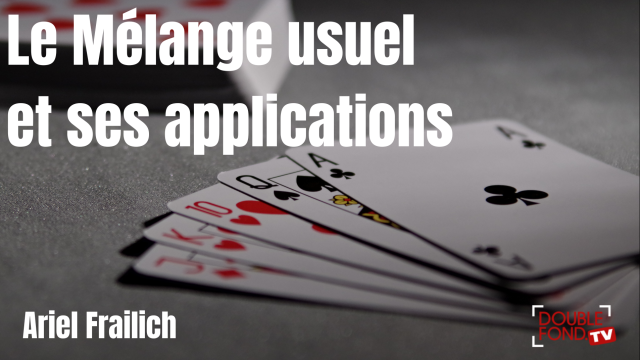 Included In The Subscription "Passionate"The overhand shuffle is one of the easiest and most common ways to shuffle a deck of cards. Itâs an excellent shuffle for magicians, because laymen are already familiar with it and it allows you to do some excellent controls and false shuffles while shuffling the deck this way. Ariel Frailich explains the techniques used, various applications (controls, stock shuffles, false total shuffles, etc.), as well as several tricks in this video, which is divided into five episodes. To buy an ordinary deck of cards click here.
 -
 Included In The Subscription "Passionate"Two coins magically jump from the left hand into the right hand, owing to the famous Han Ping Chien Move ( explained in details). To buy: Â some half-dollar coins click here. one chinese coin click here.
 -
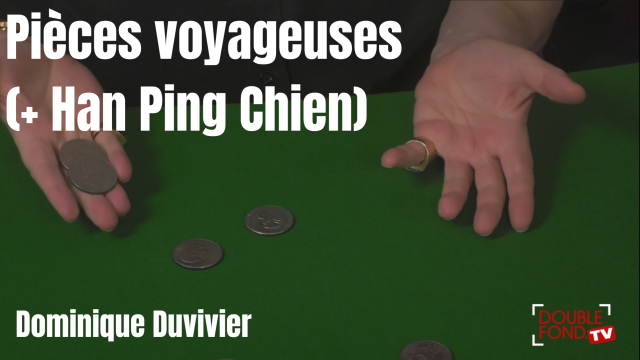 Included In The Subscription "Passionate"The magician shows 6 coins. He takes 3 in each hand. The coins mysteriously travel from one hand to the other: they disappear in one and gather together in the other. Optionally, we explain the Han Ping Chien technique. To buy some Eisenhower dollars click here.Â
Included In The Subscription "Passionate"The magician shows 6 coins. He takes 3 in each hand. The coins mysteriously travel from one hand to the other: they disappear in one and gather together in the other. Optionally, we explain the Han Ping Chien technique. To buy some Eisenhower dollars click here. -
 Included In The Subscription "Passionate"A very simple Ace Assembly routine. The four Aces are laid out on the table in a row, with three indifferent cards placed on top of each Ace. The first three Aces disappear from their respective packets and collect in the last packet. Neat and tidy! To buy an ordinary deck of cards click here.
 -
 Included In The Subscription "Passionate"A four coins across effect (coins magically travel from one hand to the other). To buy some half-dollar coins click here.
 -
 Included In The Subscription "Passionate"Let's continue the saga of Ace Assembly effects. The four Aces are laid out on the table in a row, with three indifferent cards placed on top of each Ace. The first three Aces disappear from their respective packets and collect in the last packet. Neat and tidy! To buy an ordinary deck of cards click here.